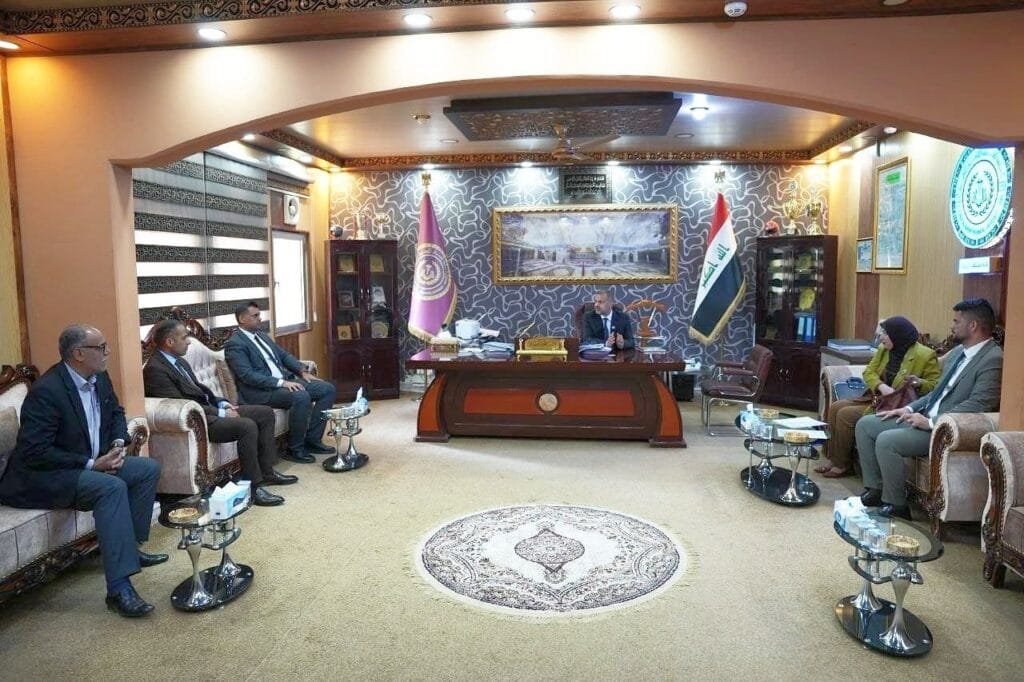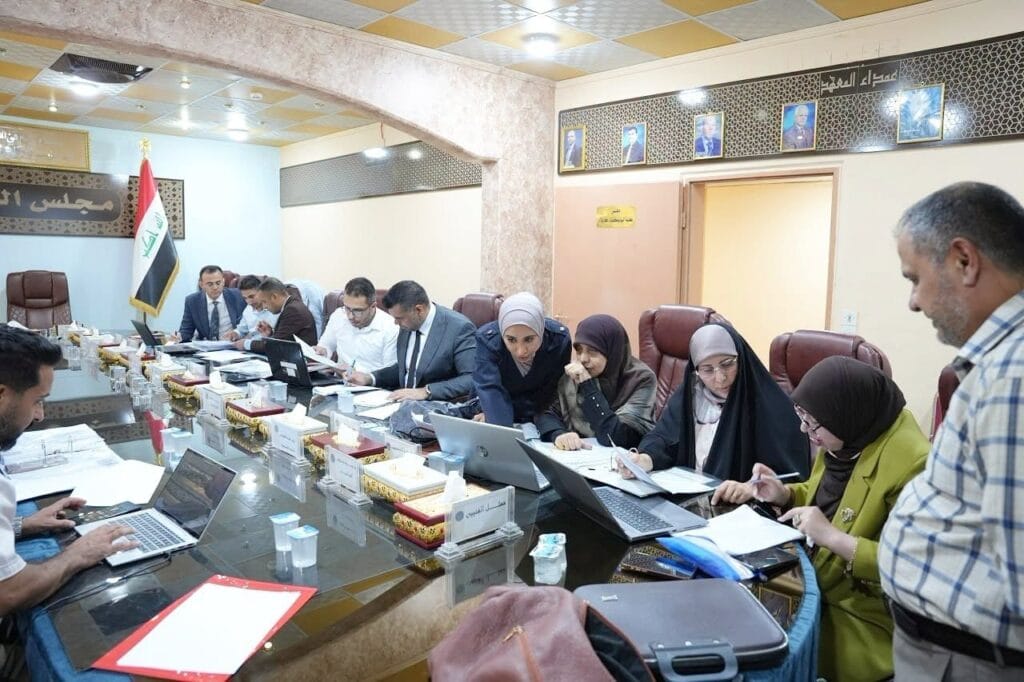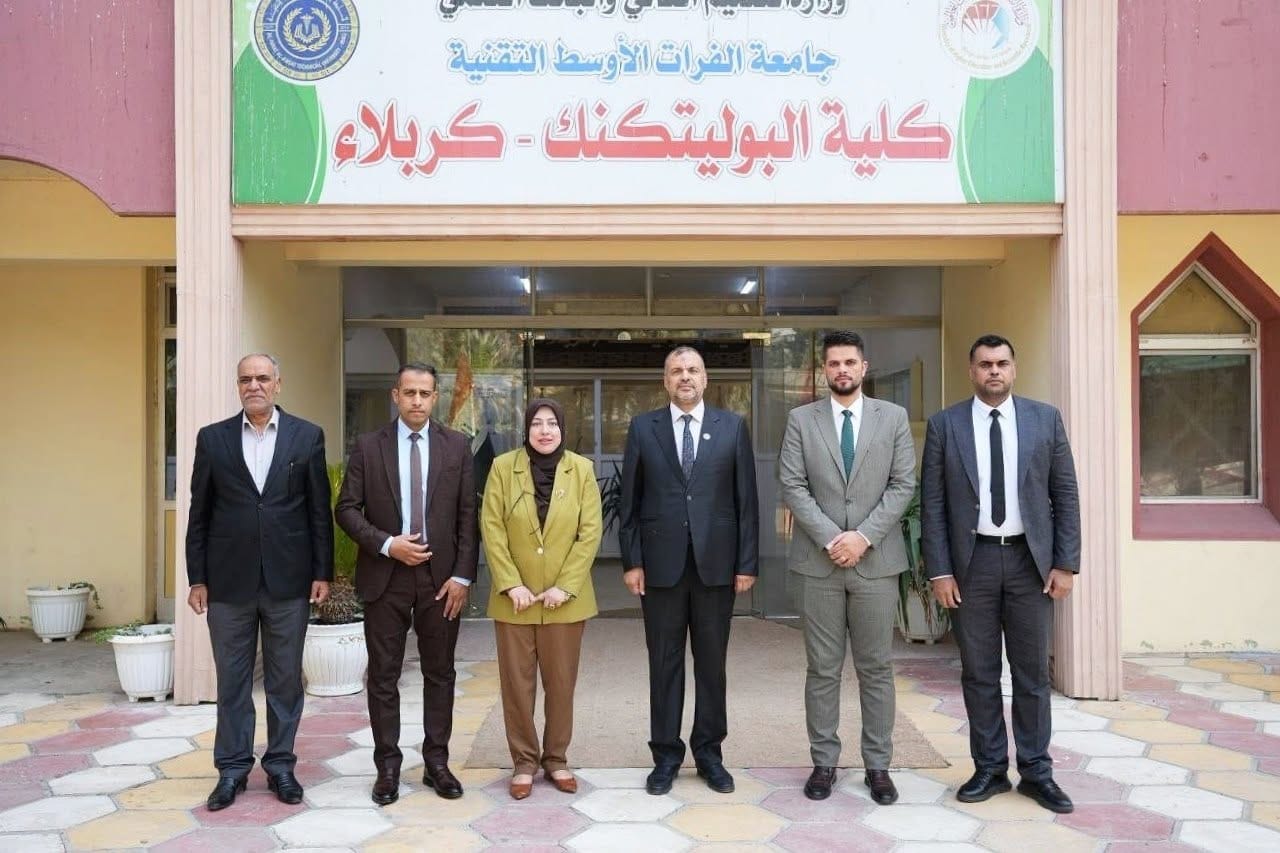
Within the framework of Al-Furat Al-Awsat Technical University’s efforts to monitor the quality of scientific and academic performance in its formations, the Dean of Karbala Polytechnic College, Prof. Dr. Fadel Mohammed Dhaher, alongside the Associate Dean for Administrative and Financial Affairs, Asst. Prof. Dr. Ali Kadhim Al-Sharifi, and the Director of the Quality Assurance and Performance Division at the college, Asst. Prof. Ali Nima Hassan, received a specialized committee from the university. The committee conducted an evaluation visit to assess the scientific and academic reality of the administrative specializations and the extent to which they meet the approved axes and standards.
The visit included evaluating the scientific and academic reality of the departments of Business Administration Technology, Accounting Technology, Financial and Banking Sciences Technology, and Tourism Technology. The assessment relied on the administrative form prepared by the Committee of Deans of Administrative Specializations, which included a set of axes and indicators dedicated to measuring the level of performance and the fulfillment of specified requirements and standards.
The evaluation involved reviewing the actual conditions of the departments and examining the documents and requirements related to the axes listed in the form. It also included following up on relevant academic and administrative procedures and practices, which contributes to diagnosing strengths, identifying areas requiring development, and supporting plans for continuous improvement and performance elevation.
The committee delegation included Asst. Prof. Dr. Rana Nasser, Asst. Prof. Dr. Samer Hameed Safar, Asst. Prof. Dr. Hussein Talib Hashim, and Asst. Prof. Dr. Haider Sultan Dawood. During the visit, the committee reviewed the relevant files and documents and discussed the most prominent indicators and evaluation requirements.
This visit comes as part of the evaluation and follow-up system adopted by Al-Furat Al-Awsat Technical University to enhance the quality of scientific and academic performance across its formations. It aims to consolidate a culture of continuous improvement and institutional development, thereby contributing to supporting the quality of administrative programs and specializations and elevating their outcomes in accordance with the requirements of modern university education.