Skip to content

About the Department

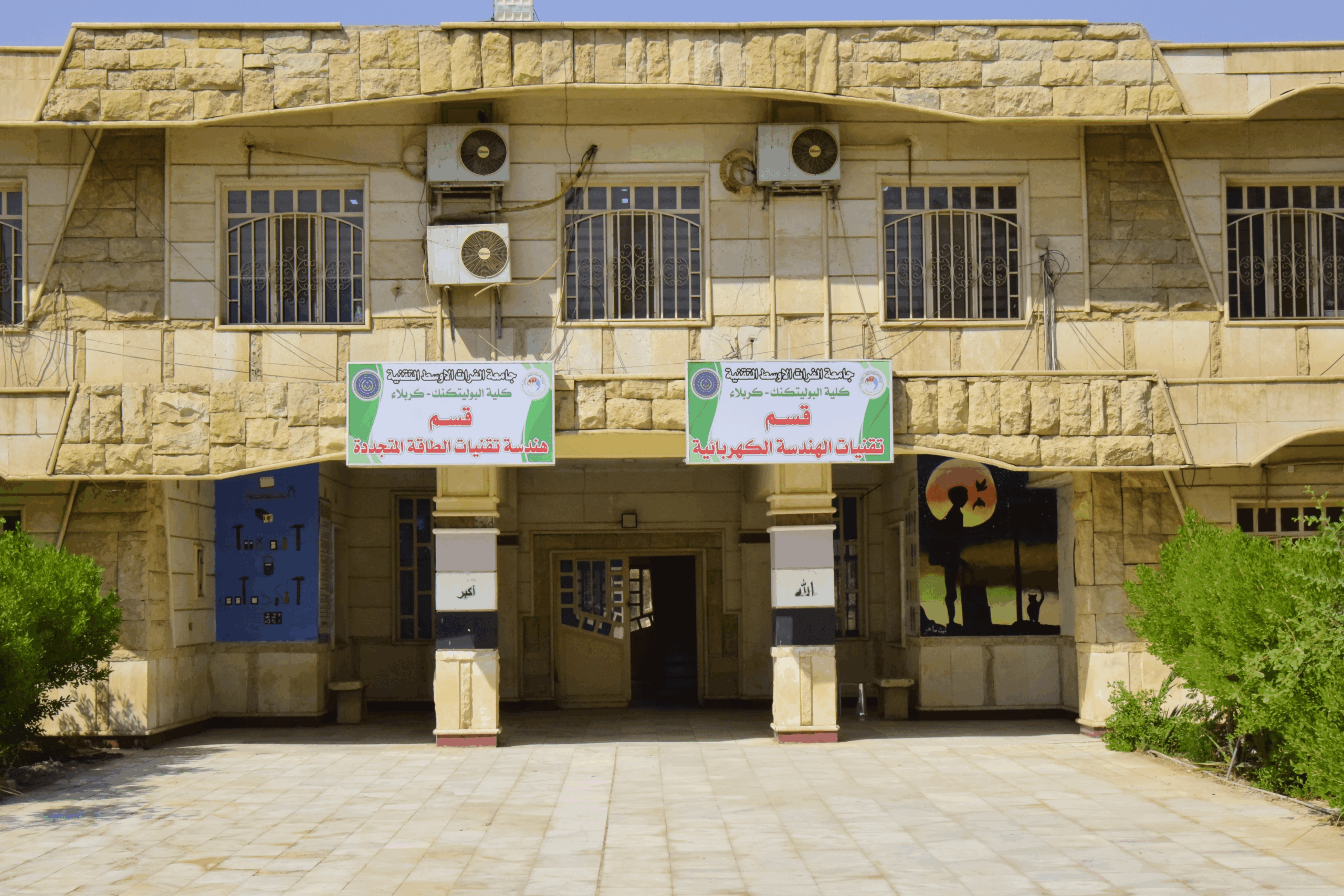
The Electrical Technology Engineering Department / Electrical Power Branch was established in 1989 (originally under the name Electrical Technologies), serving as the first building block for academic and technical education in the province. In 2025, the department formally transitioned into the Electrical Technology Engineering Department. It houses a large suite of laboratories that contribute significantly to the accomplishment of academic programs and the imparting of technical skills to both staff and students alike.
To implement a highly practical educational system that includes specialized colleges focused on practical and technological application. This system allows students to obtain scientific degrees ranging from a Diploma, Bachelor's, and Higher Diploma, up to Master's and Ph.D. degrees. The department aims to consolidate the integration between academic and applied education to meet labor market needs and enhance entrepreneurship in accordance with national and international academic standards for quality accreditation.

  1. Stimulating Demand for Technical Specializations: Encouraging students to enroll in specializations that actively meet the requirements of the labor market.

  2. Integrating Academic and Applied Education: Effectively linking theoretical knowledge with practical skills and technical expertise.

  3. Opening New Horizons for Innovation and Entrepreneurship: Empowering students to contribute to broad industrial and economic development.


  1. Qualifying scientific and technical cadres within the department who possess high scientific and practical skills in the Electrical Engineering Technologies specialization. These cadres are capable of implementing and updating study curricula in laboratories by involving the department's staff in teaching and planning programs across various electrical applications. This is done according to prepared plans that align with the requirements of technological advancement, elevating the staff in accordance with national and international academic standards for quality accreditation.

  2. Providing scientific and technical services to various sectors of society.

  3. Opening up and communicating with corresponding scientific institutions to ensure the active exchange of expertise, information, skills, and scientific research.

  4. Contributing to community service through workshops and training programs focused on electrical engineering applications, in direct cooperation with the functional rehabilitation and continuous education units at the institute.

  5. Utilizing clean energy to preserve and sustain the environment.

After completing the program, the graduating student will be qualified to perform the following tasks (in both technical and engineering capacities):

  1. Supervise, install, operate, and maintain electrical equipment, and execute electrical installation works.

  2. Supervise, install, and operate electrical units in power generation stations as well as electrical energy transmission and distribution networks.

  3. Supervise, install, and operate electrical machines.

  4. Operate and follow up on industrial production lines, monitoring their operations and managing their continuous running.

  5. Establish, install, and operate photovoltaic stations (solar cells).

  6. Supervise, install, and operate modern electric vehicles.

  7. Supervise, install, and operate electrical elevators and PLC (Programmable Logic Controller) systems.

  8. Draw electrical blueprints for homes and buildings using computer software (AutoCAD).