Skip to content

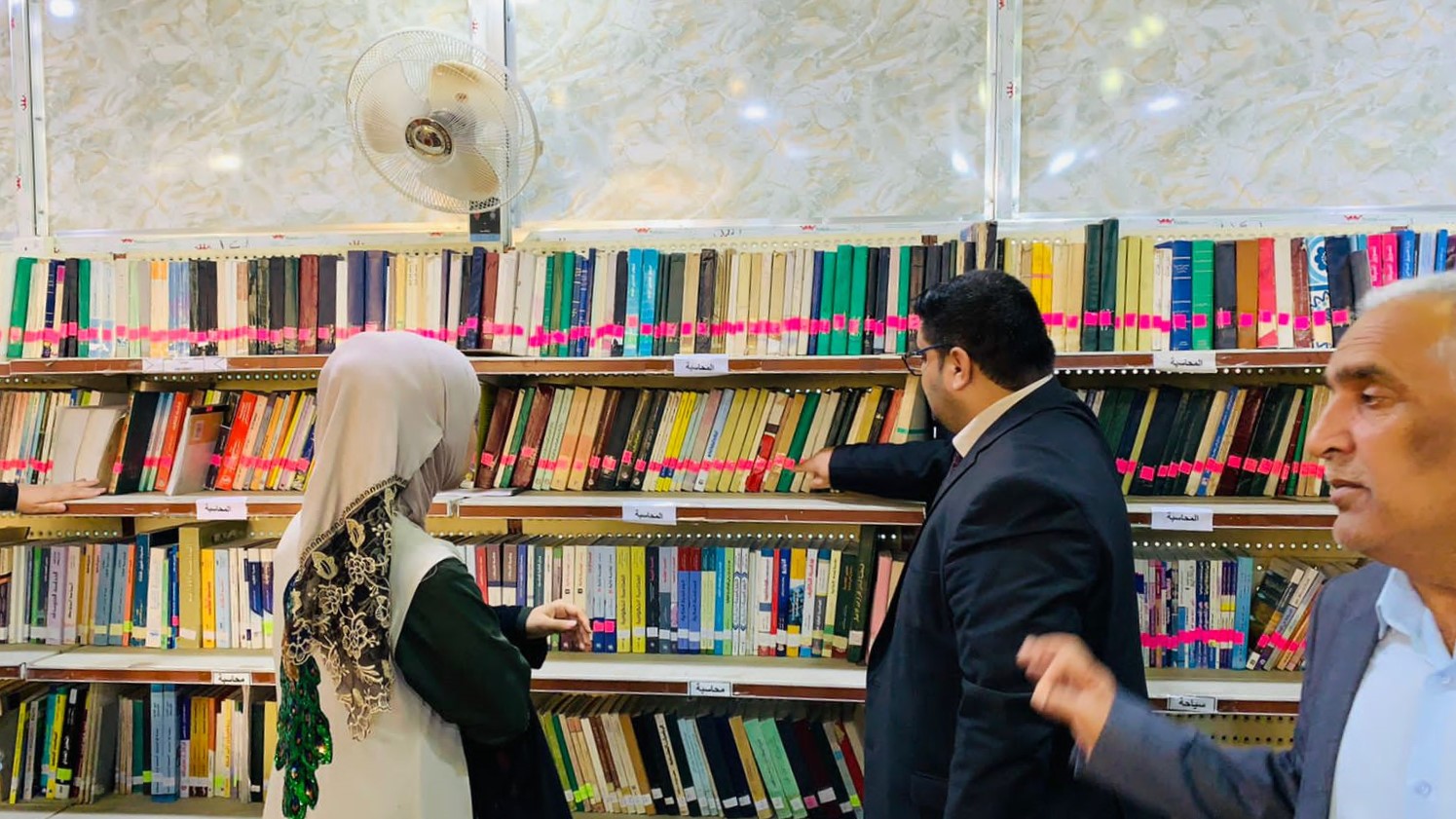
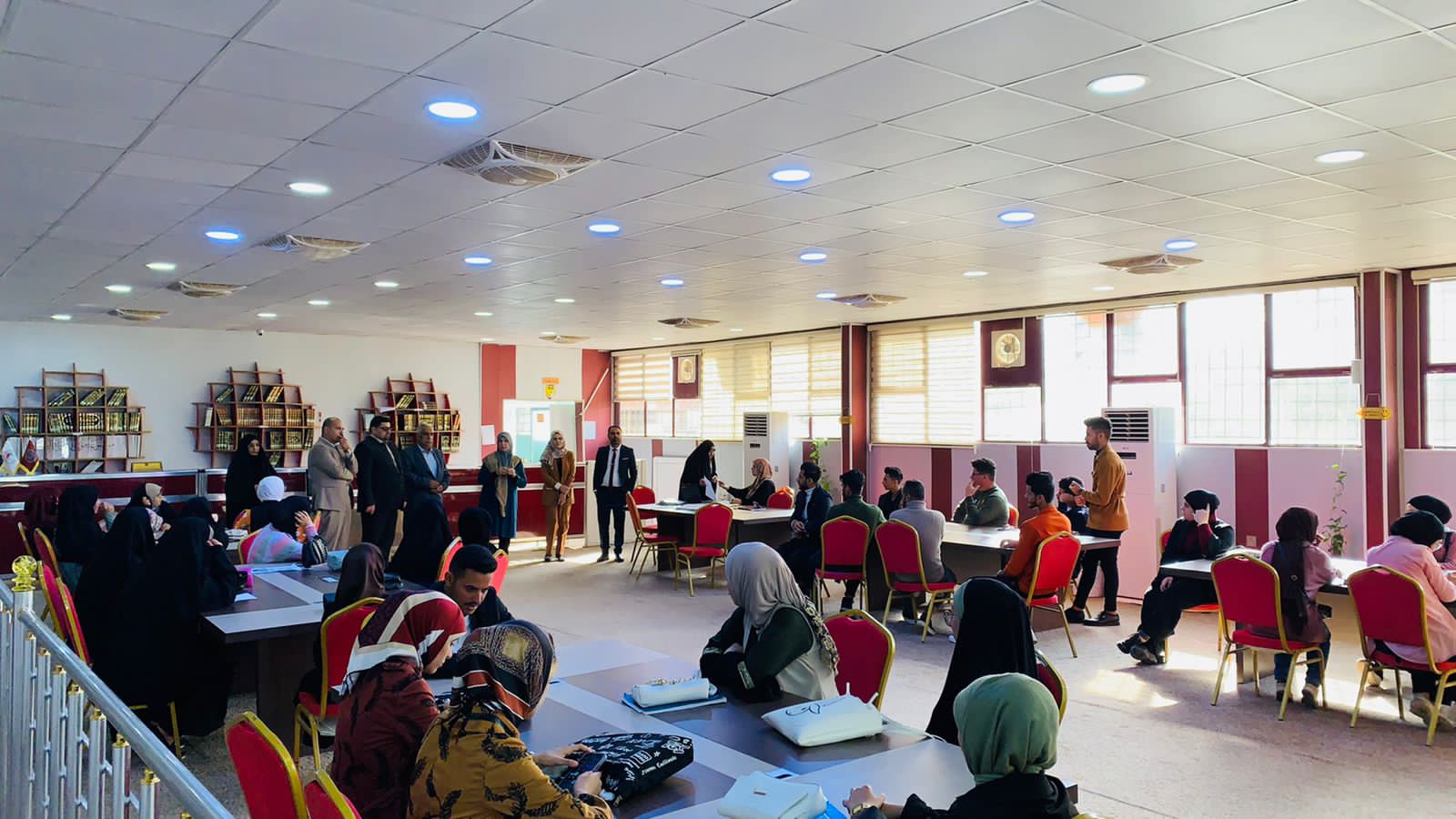
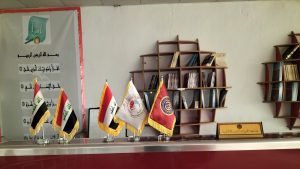
The Central Library Division at Karbala Polytechnic College serves as a scholarly and cultural cornerstone, dedicated to fostering a knowledge-empowered generation by providing students and researchers with a comprehensive range of resources, including books, theses, and periodicals. The Division oversees procurement, cataloging, and periodic inventory management, while administering circulation via an advanced electronic system that ensures data integrity and operational efficiency. Furthermore, the library is committed to maintaining a quiet study environment within its reading halls, supervising branch libraries, and continuously updating its digital and physical collections. The Division operates according to regulatory frameworks that define lending protocols and durations for various user categories, striving to cultivate innovative and intellectually balanced student personalities to serve the broader cultural movement in society.

مسؤول الشعبة

Head of Division : Asst. Lect. Yas Khudhair Ali

Division Strcuture


  1. Educating a generation that is well-versed in science and knowledge.

  2. Building an Iraqi society based on values and democratic principles.

  3. Preparing a generation of professors and researchers who will lead the cultural and administrative movement.

  4. Developing a well-rounded and balanced personality in students, enhancing their intellectual and behavioral skills, and fostering cultural, administrative, and social activities, along with a spirit of innovation and renewal.

  5. Creating a growing desire in students to continue acquiring knowledge, both during their studies and after graduation.


  1. Acquisition Department: Upon the arrival of new books, they are classified, cataloged, and entered into the library's electronic system.

  2. Internal and External Loan Services: Available to students and faculty members.

  3. Reference, Journals, and Theses Section.

  4. Email Services.

  5. Supervision and Control of the Reading Hall.


  1. Issuing official library identification cards to students free of charge.

  2. Administering internal and external lending services through the electronic circulation system in accordance with the Technical Education Commission’s regulations (Ref: 27/2/12462, dated July 19, 2009).

  3. Conducting periodic inventory and cataloging of all books, references, and theses within the library.

  4. Managing and responding to all incoming and outgoing official correspondence on a continuous basis.

  5. Participating in workshops and academic events organized by scientific and humanities departments hosted within the library.

  6. Facilitating and hosting college-wide events assigned to the Library Unit.

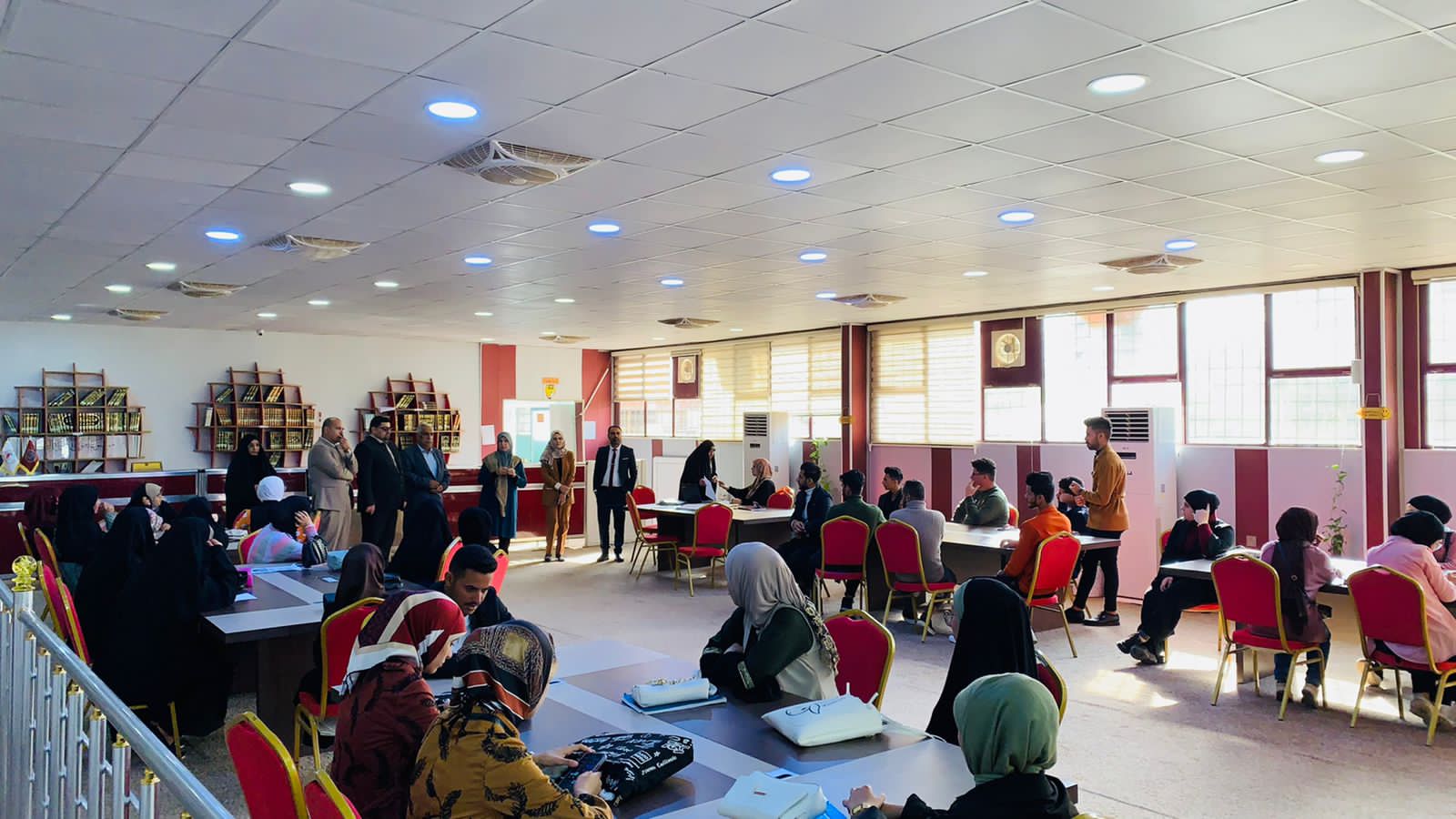
  7. Supervising reading halls to ensure a quiet and conducive environment for students conducting study and research.

  8. Managing the procurement and disposal of library resources through formal warehouse entry and exit procedures.

  9. Continuously updating library holdings and enriching the collection with modern resources.

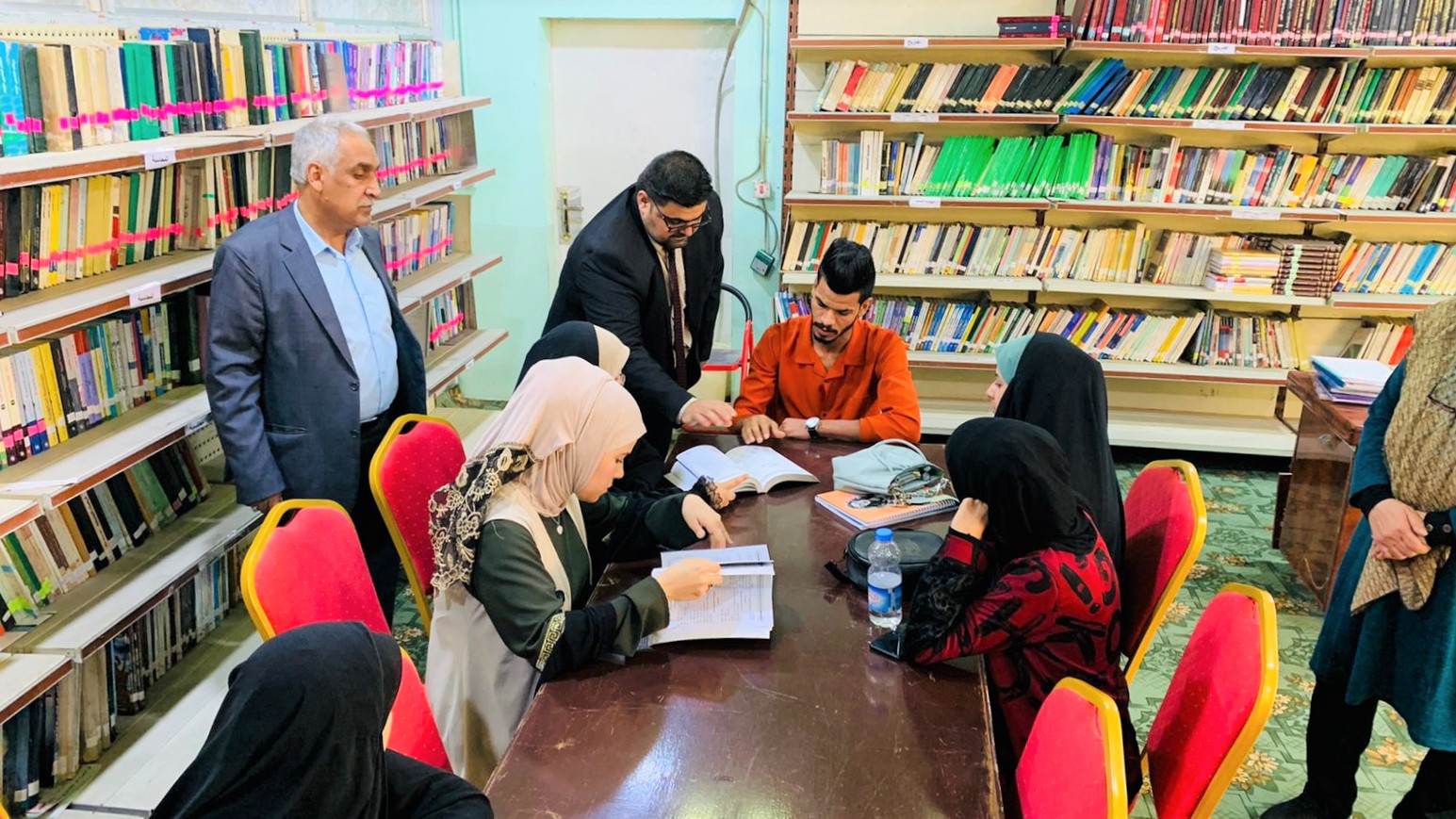
  10. Assisting students in their research by providing access to scientific references through internal and external lending protocols.

  11. Maintaining library facilities and external gardens to ensure a healthy and suitable academic environment.

  12. Monitoring and managing the official library email account on a daily basis.

  13. Overseeing and coordinating the branch libraries of the scientific and humanities departments.

  14. Assisting the General Inventory Committee with the annual or unscheduled auditing and digital logging of all library holdings.

  15. Monitoring the "Henry" Medical Journal via its official portal in coordination with the Community Health Department.

  16. Developing digital library resources for scientific and humanities departments by digitizing materials and providing them in electronic formats.

  17. Tracking and managing the library’s specialized periodical subscriptions and latest issues.


  1. The library provides services to faculty, students, and staff.

  2. Each user is issued a library ID that contains a personal photo.

  3. Only users with an ID are allowed to borrow books.

  4. The borrowing period for faculty members is one week, with a maximum of five books.

  5. Graduate students can borrow books for five days, with a maximum of three books.

  6. Undergraduate students and staff can borrow books for three days, with a limit of one book.

  7. There is no external borrowing for graduate students outside of Al-Furat Al-Awsat University; only internal borrowing and photocopying are allowed.

  8. Faculty members and staff are fined 250 Iraqi Dinars per day for each delayed book.

  9. Students are fined 100 Iraqi Dinars per day for each delayed book.

  10. In case of loss or damage to a book, the borrower is fined double the book’s catalog price or double the market value, whichever is higher.

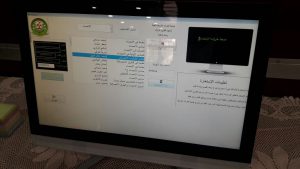
The library follows an electronic loan system that tracks all books, including their titles, authors, copies available, and classification numbers. To borrow books electronically, students must have a library ID. The borrowing process involves the following steps:

  1. Open the borrowing screen.

  2. Select the book classification.

  3. Choose the book title.

  4. Press the "Borrow" option.

  5. Enter the ID number.

  6. Verify the book details before submitting the borrowing request.

  7. Submit the borrowing request.


The request is received electronically through a computer system connected to the borrowing screen, after which the requested book is handed over to the student. This system helps library staff track the borrowing process, including the duration of the loan, overdue periods, and generates statistics on borrowing patterns, book availability, and classifications.

Departmental Libraries within Scientific Divisions

Prev |
Next