Within the framework of the Medical Laboratory Technology Department’s keenness at Karbala Polytechnic College to develop practical skills and enhance the applied aspect for its staff and students, the department held a training course titled “Steps to Obtain Some Histological Sections,” with the participation of a number of faculty members and those interested in the laboratory aspect.
The training course included a brief explanation of the most important practical stages that a tissue sample undergoes inside the laboratory, starting from the sample collection and fixation stage, down to sectioning, staining, and microscopic examination. It emphasized the importance of adhering to precise laboratory steps to ensure obtaining high-quality histological slides capable of showing the fine cellular details relied upon for pathological diagnosis and scientific research.
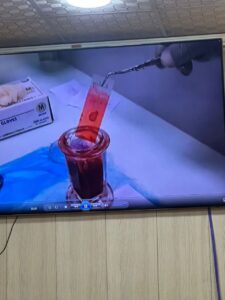
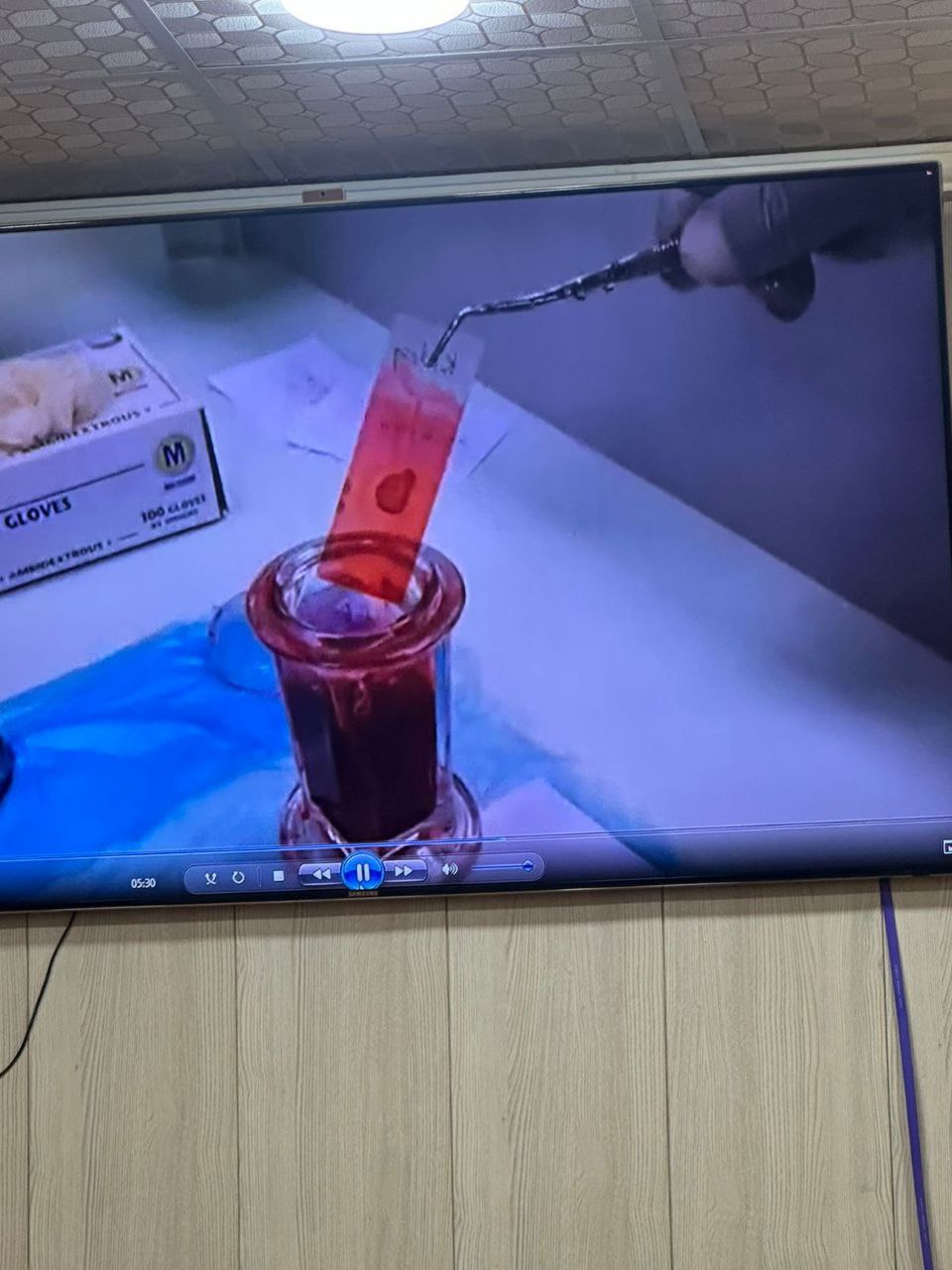
The course also reviewed a number of basic axes, which included the mechanism of collecting the sample in the appropriate size and correct manner, and fixation using formalin to preserve the cellular structure. Furthermore, it covered the stages of dehydration and paraffin embedding, the use of a microtome device to cut sections at precise thicknesses, in addition to staining using various dyes, especially the H&E stain common in histological studies.
The course was presented by Asst. Prof. Dr. Thurayya Amer Habib, Asst. Lect. Hadeel Salah Mahdi Mohammed, and Asst. Lect. Mohammed Majid Hamid. The course witnessed distinguished interaction from the attendees through discussions and scientific interventions that contributed to clarifying the importance of accuracy in laboratory work and its role in improving the quality of histological sections and supporting the educational and research process.
The organization of this course comes in the context of the directions of Al-Furat Al-Awsat Technical University and the Ministry of Higher Education and Scientific Research aimed at enhancing the quality of applied education and developing laboratory skills to keep pace with the requirements of scientific research and serve society.